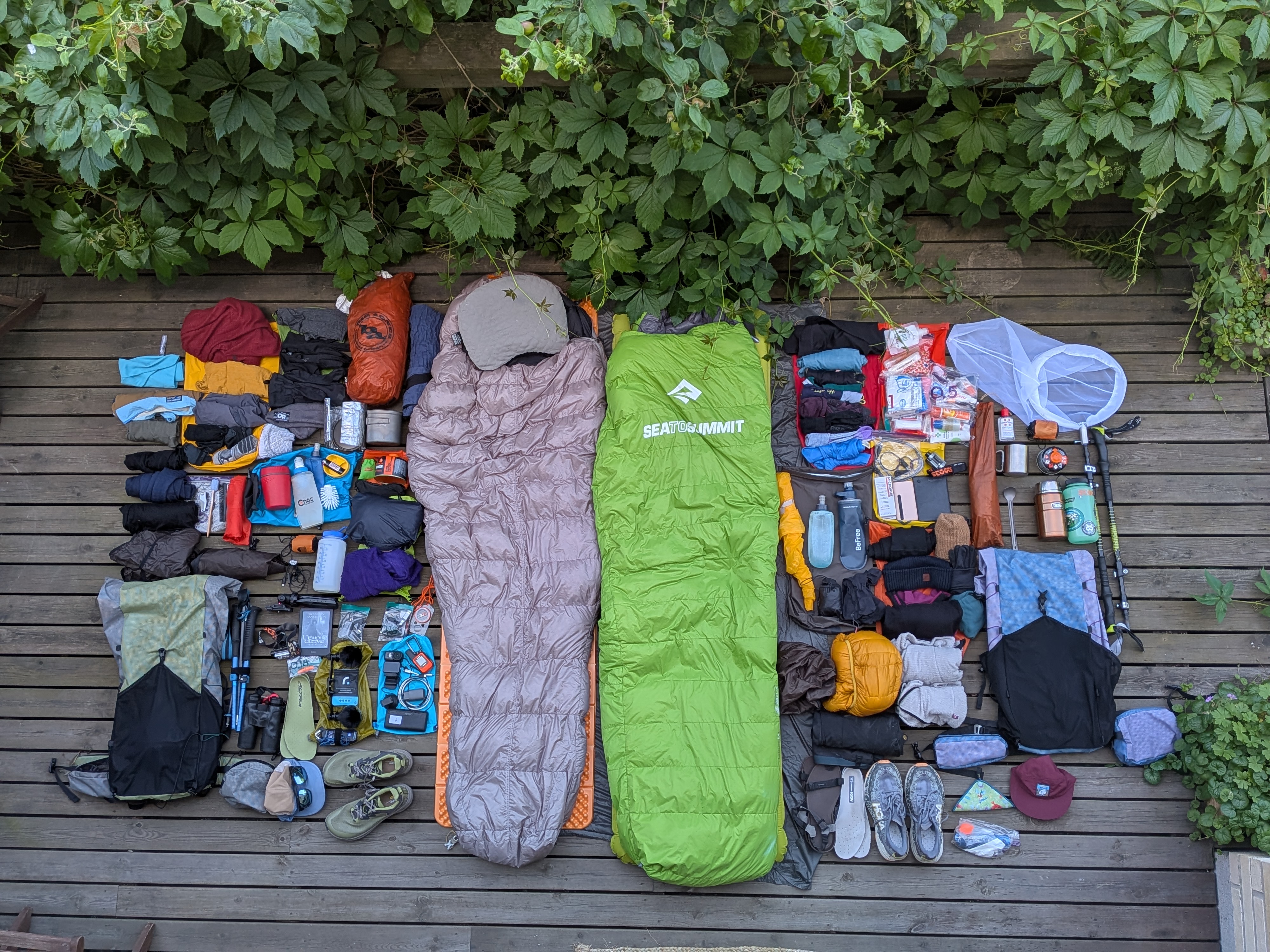
The gear
After our experience of a 13-day hike in Norway and Sweden during the 2024 summer, we learned a lot. Despite our good knowledge of multi-day hikes in winter and summer, self-sufficiency and the Arctic climate taught us a lot.
First, the lighter, the better. But what can you remove? And still have enough comfort to endure cold, rain and wetness?
After a couple of tests and handmade gear, we ended up with a list.
This article has been written as we prepare for the Gröna Bandet 1300km hike through the Swedish mountains.
We will have a post-hike feedback.
We had no sponsor or free gear.
The shoes
 Laura
Laura
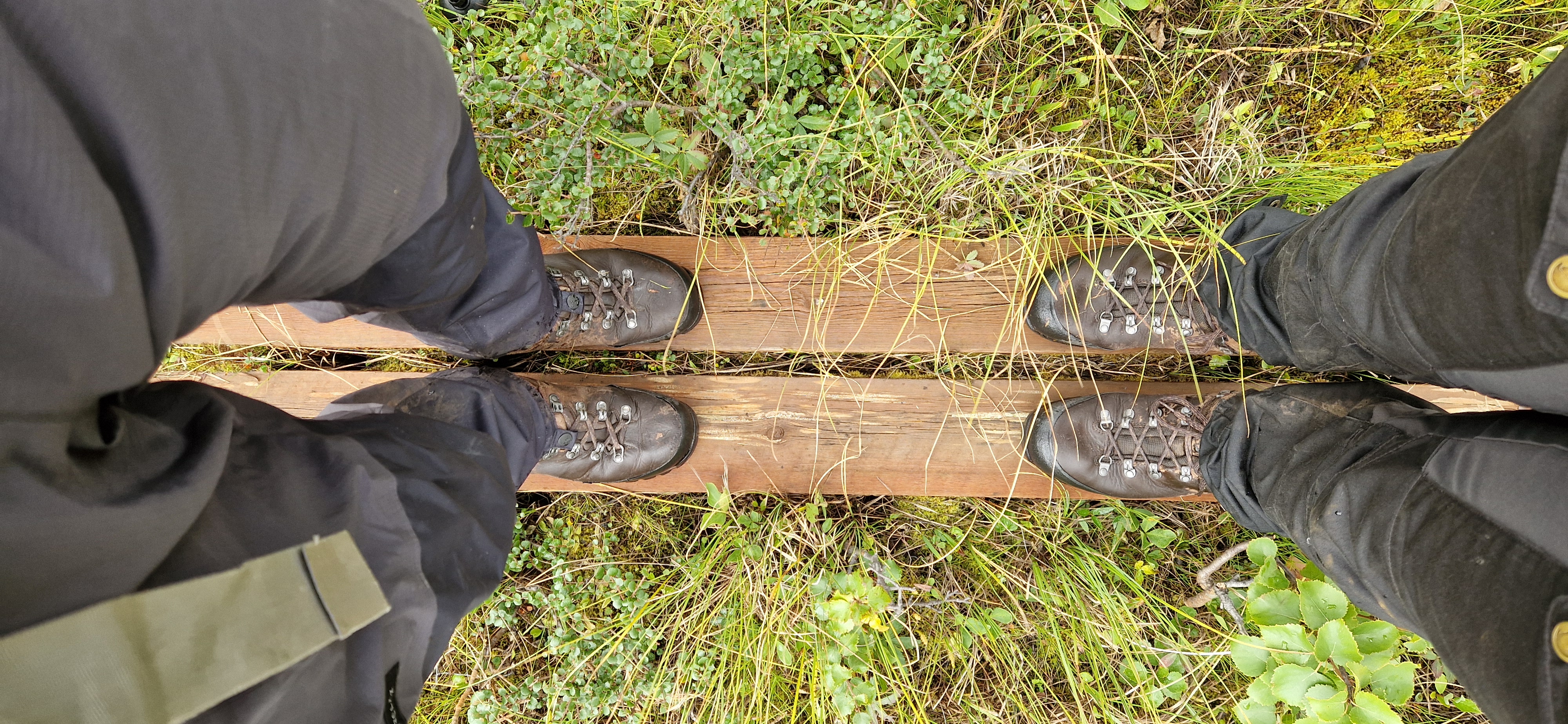
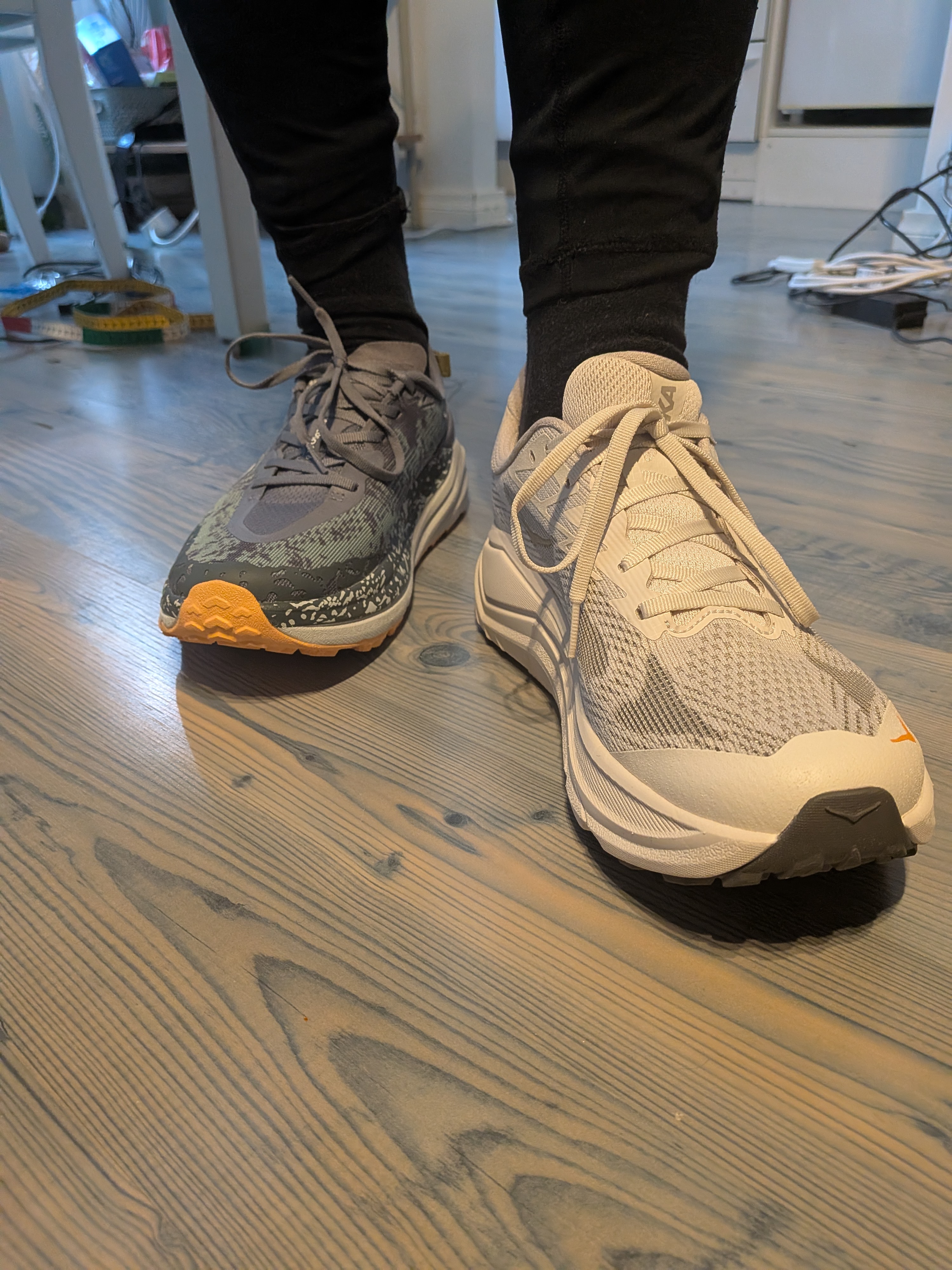
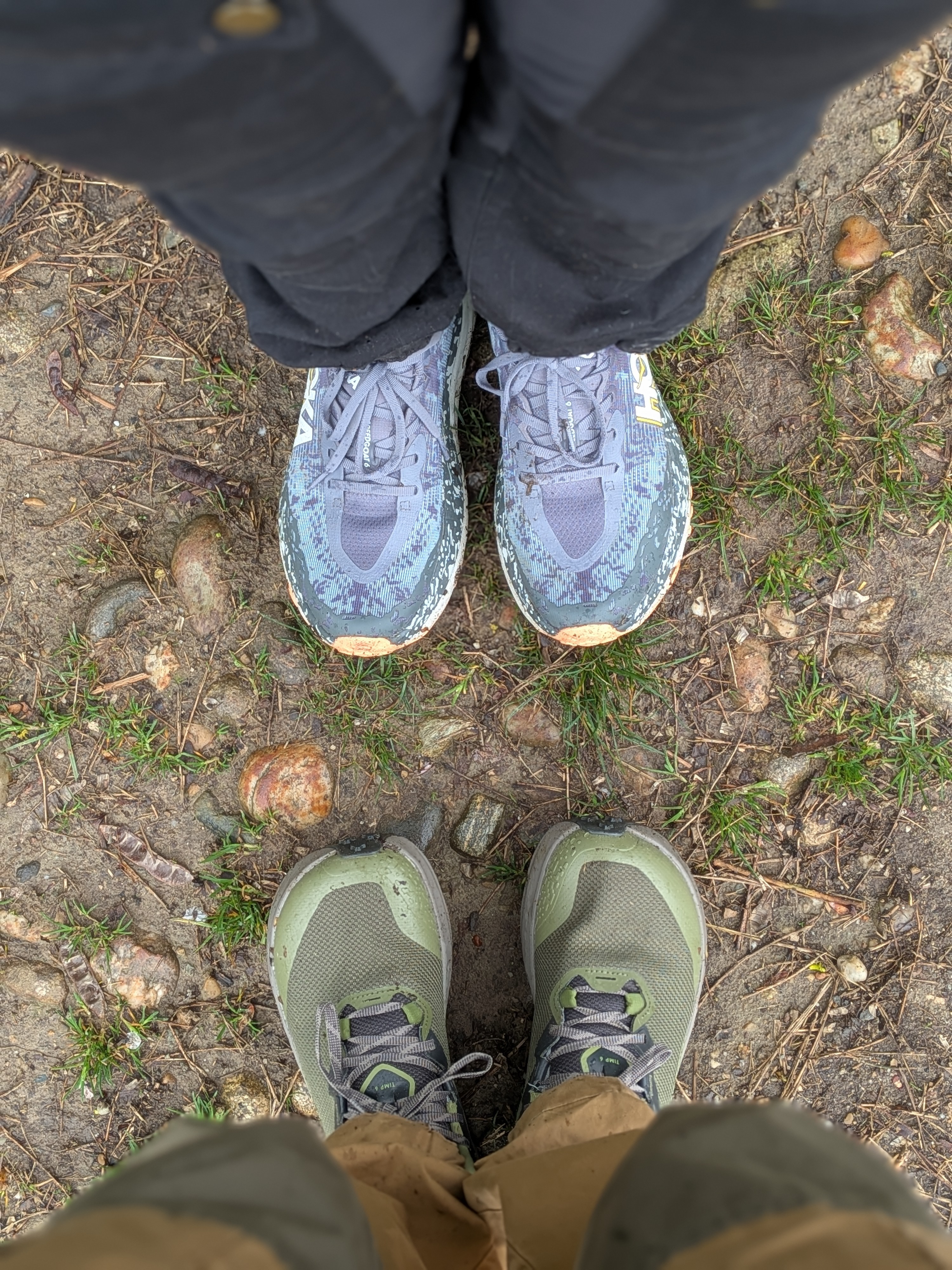
After the summer hike in Norway, we decided to switch from the "good old time" leather boots (in the picture above) to trail running shoes.
Why? Let me explain:
Reason 1: The weight
After 15km and a lot of elevation, my knees started to hurt while hiking in the mountains. And having lighter shoes removes some of the weight that you have to lift with every step.
Reason 2: The breathability
This is a big one!
We chose shoes without any waterproof or water-repellent coatings (like Gore-Tex). First of all, because of pollution reasons, every time the shoes get wet, a little bit of the coating leaks into the environment. And boy, the terrain we will cross in Sweden will be wet. We will cross swamps and rivers, and if that's not enough, the summers of the Nordics are known to be very rainy.
That is why, maybe most importantly, we want to keep our feet as dry as possible. Happy feet equal happy hiker!
Heavy hiking boots are sturdy, but once you have gotten them wet, they will hold on to that moisture like their life depends on it! Having toes staying in a mix of water and sweat is the best way to create blisters and other skin problems. That's why we think it is better to get your feet wet, maybe more often, but that can dry fast during a break, under the sun or even while walking.
Reason 3: Flexibility
The big hiking boots are made to support your ankle as well as keep their form under heavy load. So, having light shoes if you have a heavily loaded backpack might even be dangerous in challenging terrain. That is why we had to reconsider our gear and work towards getting lighter, but also train more to have strong ankles and legs. This is one of the reasons that pushed us on the trail to run and make our legs stronger!
The bottom
The pants
Our well-proven Fjällraven pants are durable, comfy, mosquito-proof, and of course, coming with us!
The shorts
Crossing open highland under a harsh sun without any shade can be very hot. Light shorts make it much more enjoyable! They are used as spare clothes as well if we want to wash our pants.
The rain skirt
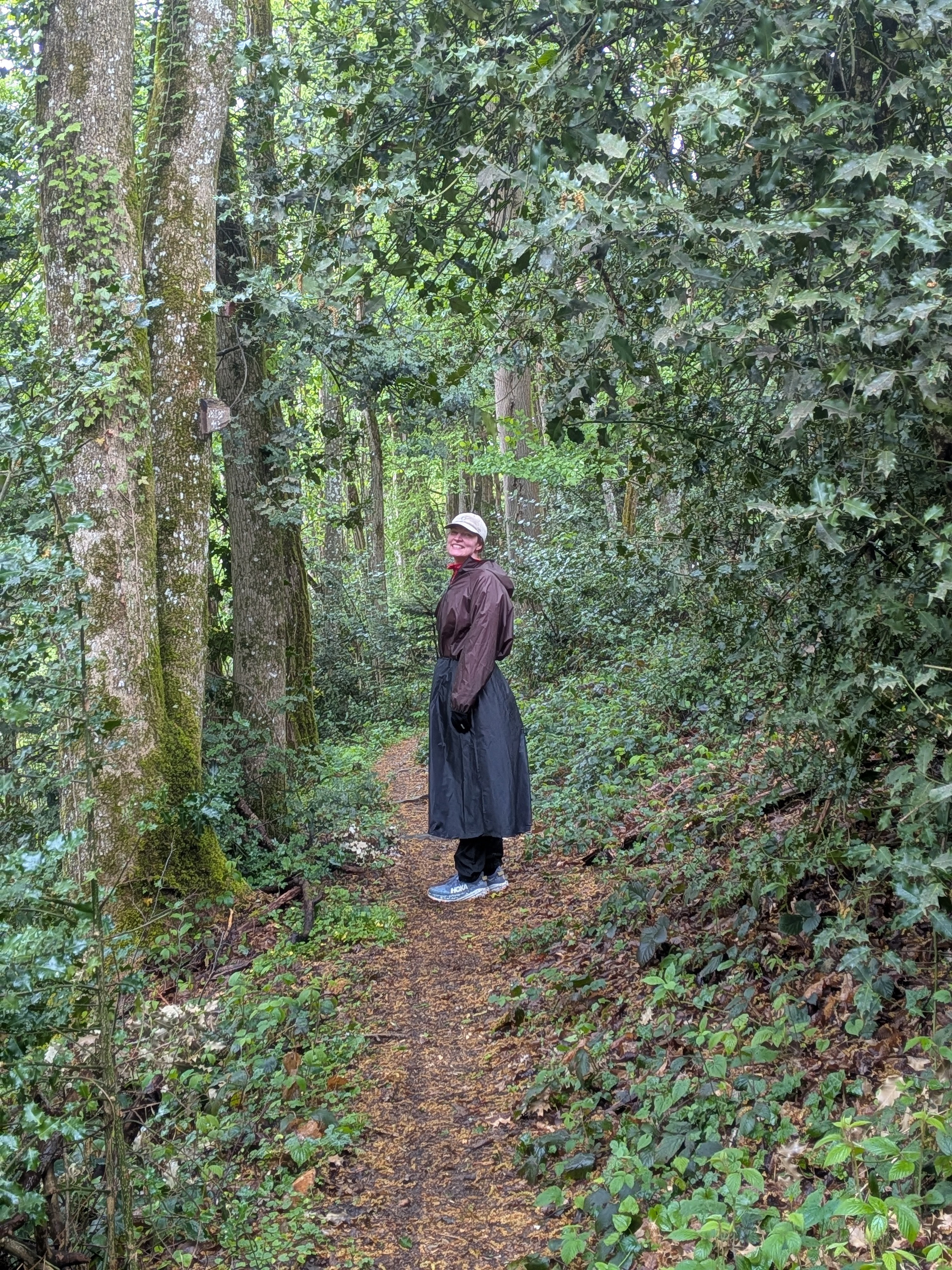
We have tried several different systems, and for this hike, we ended up with rain skirts. They are ultra lightweight (100g) compared to rain pants (400-500g). They go into an extremely small space and are very easy to put on and take off while wearing shoes. They also give you a bit of warmth while not making you sweaty.
Absolutely in love with it!
The merinos and woollen socks
To stay warm at night, we have merino pants. They are always in a waterproof bag to be sure to have dry, warm clothes to change into in bad weather.
Laura : I go nowhere without woollen socks that her mom has made. They give warmth and comfort when getting into the sleeping bag for the night.
The top
The key here is LAYERS! That way, our clothes together protect us in cold and wet conditions, while keeping the backpack as light as possible.
Sun hoodie
This is going to be the first big hike we will use Z-pack sun hoodies. After a long time with a classic sports shirt, we decided to invest in a sun hoodie. We picked the Z-pack one because they are merino-based. It avoids sweating too much, smells, and is partly UV-proof. With the long sleeve shirt, the hat and a cap, you reduce the use of sunscreen.
Light fleece
We got ultra-light fleece to warm us up during the hike as well as in the camp. It needed to be warm, breathable, and fast drying.
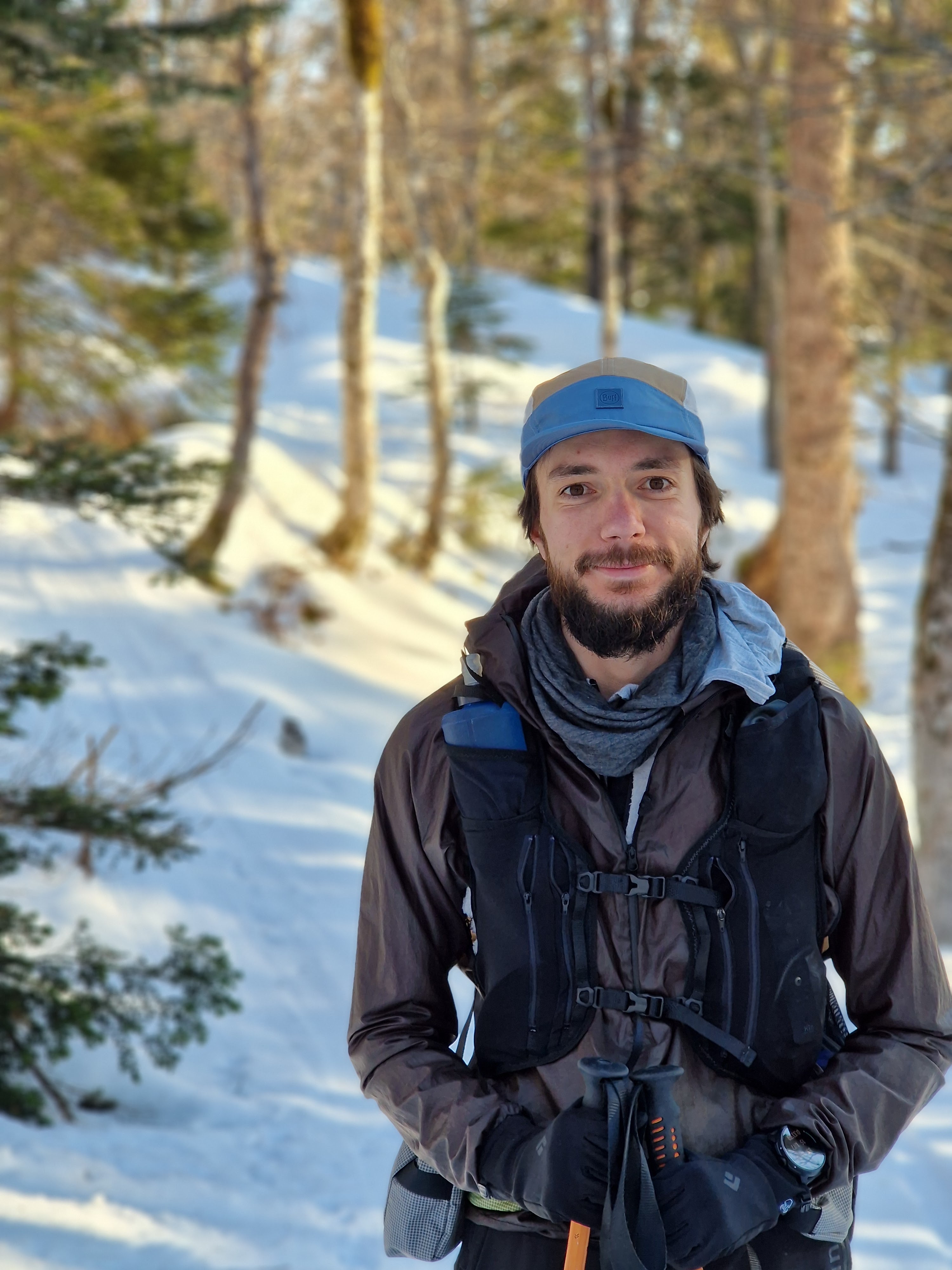 Clem : I chose a Bonfus fleece made out of Polartech Alpha direct fabric, which is everything a light backpacker could ask for.
Laura : I got a Rukka Primaloft active fleece, which has similar properties but a lower price.
Waterproof jacket
If you have ever been in the summer in Sweden, you know that it rains often. And especially showers that are quite strong and sudden.
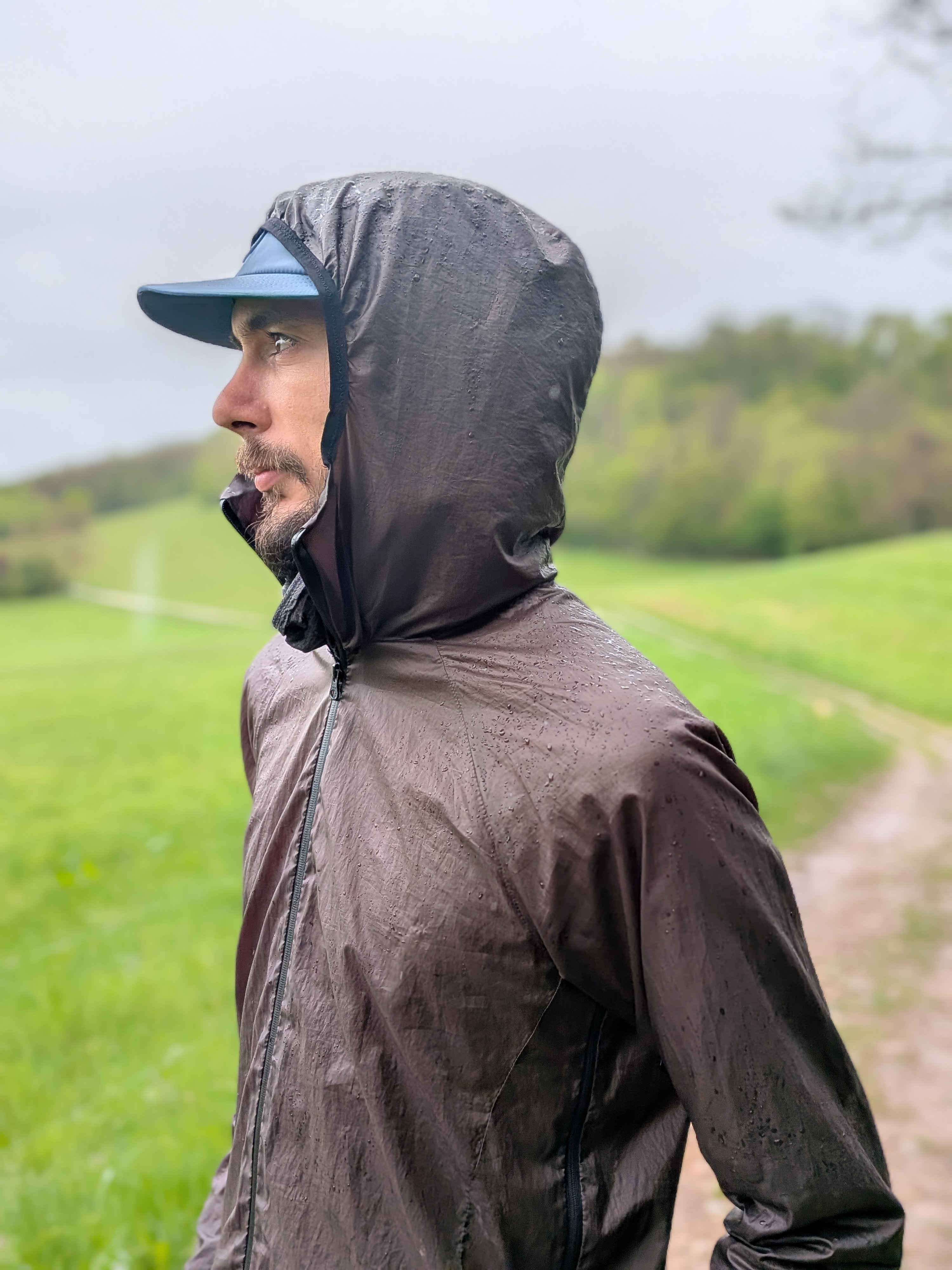
Clem : I sewed for both of us ultra-light waterproof jackets in Silpoly 70D. They are completely non-breathable, but have huge underarm zippers for ventilation. Also, they can handle all the rain and wind. Sweden has to offer us.
There is no DWR or Gore-Tex proofing because the layering already makes it waterproof. It's the same fabric as a tent. It dries quickly just with the wind because the fabric doesn't get saturated with water, and the drops just slide on top of it.
Down jacket
When having a break or at the base camp, a down jacket is a must to stay warm. We can then let the rest of the clothes dry in the sun or in the tent when staying comfy with the down jacket.
The merinos
For the night, we have the merino wool shirts. This, paired with a down jacket, is surely going to keep us warm even in very cold conditions.
The backpack
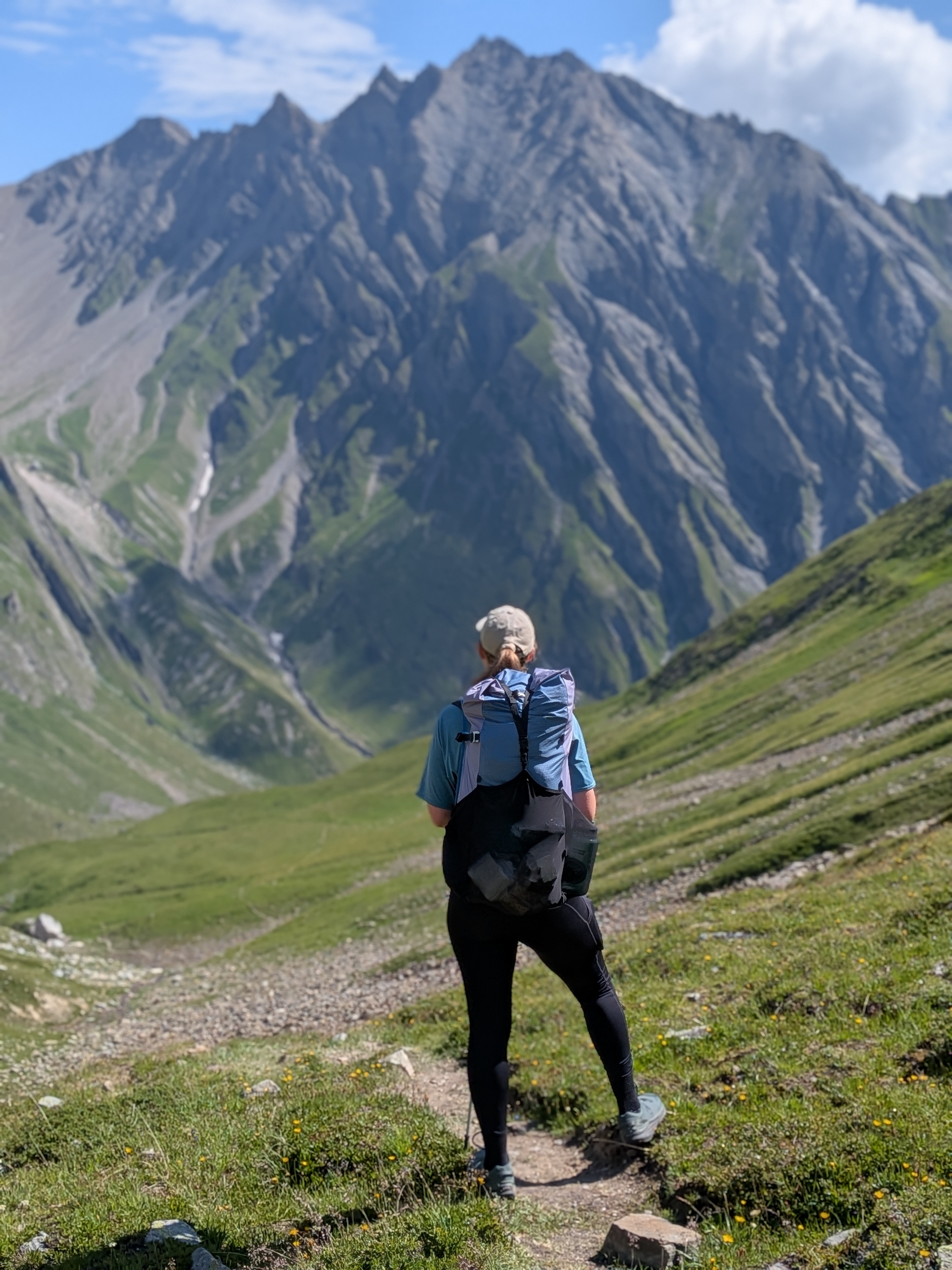
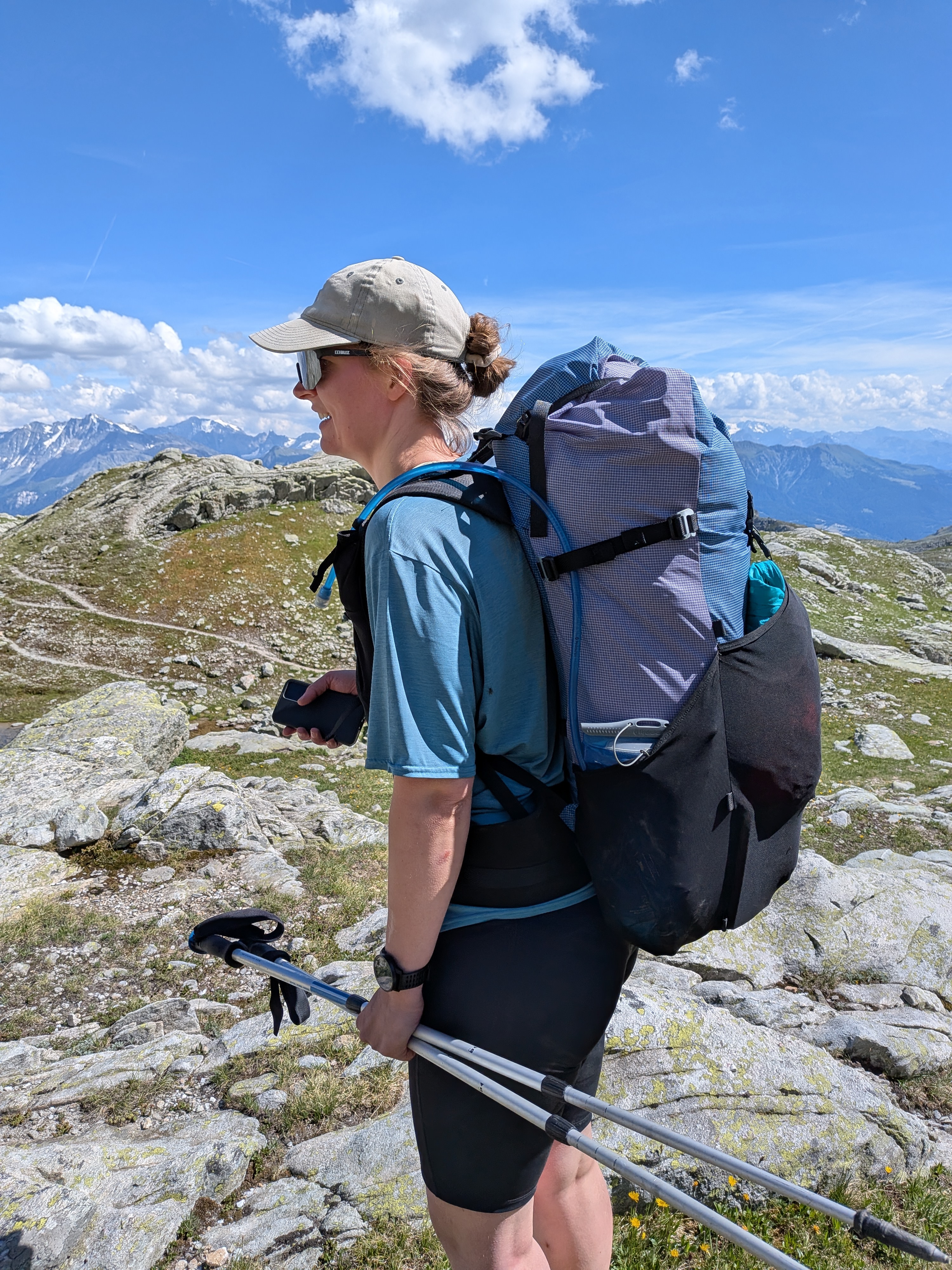
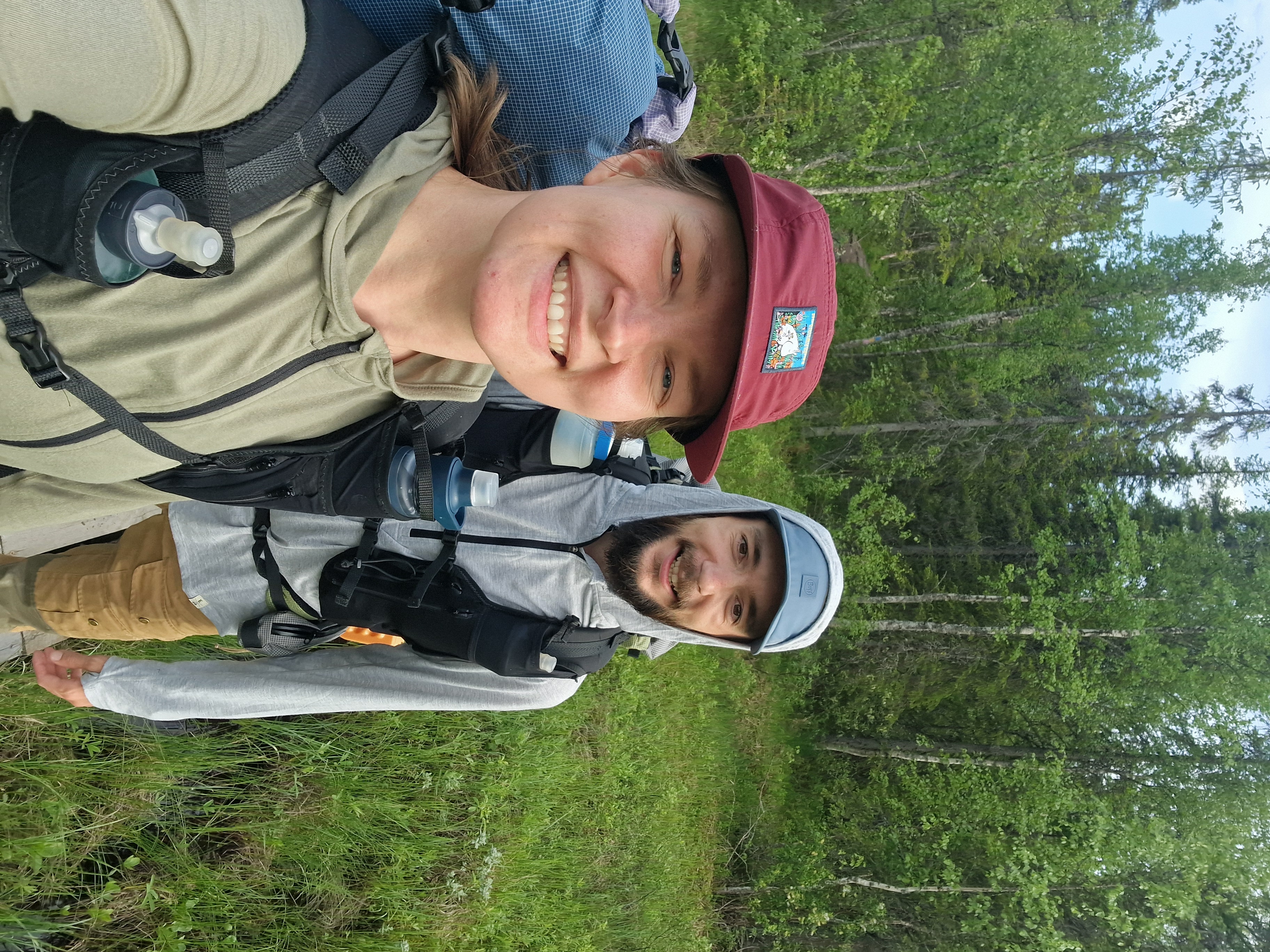
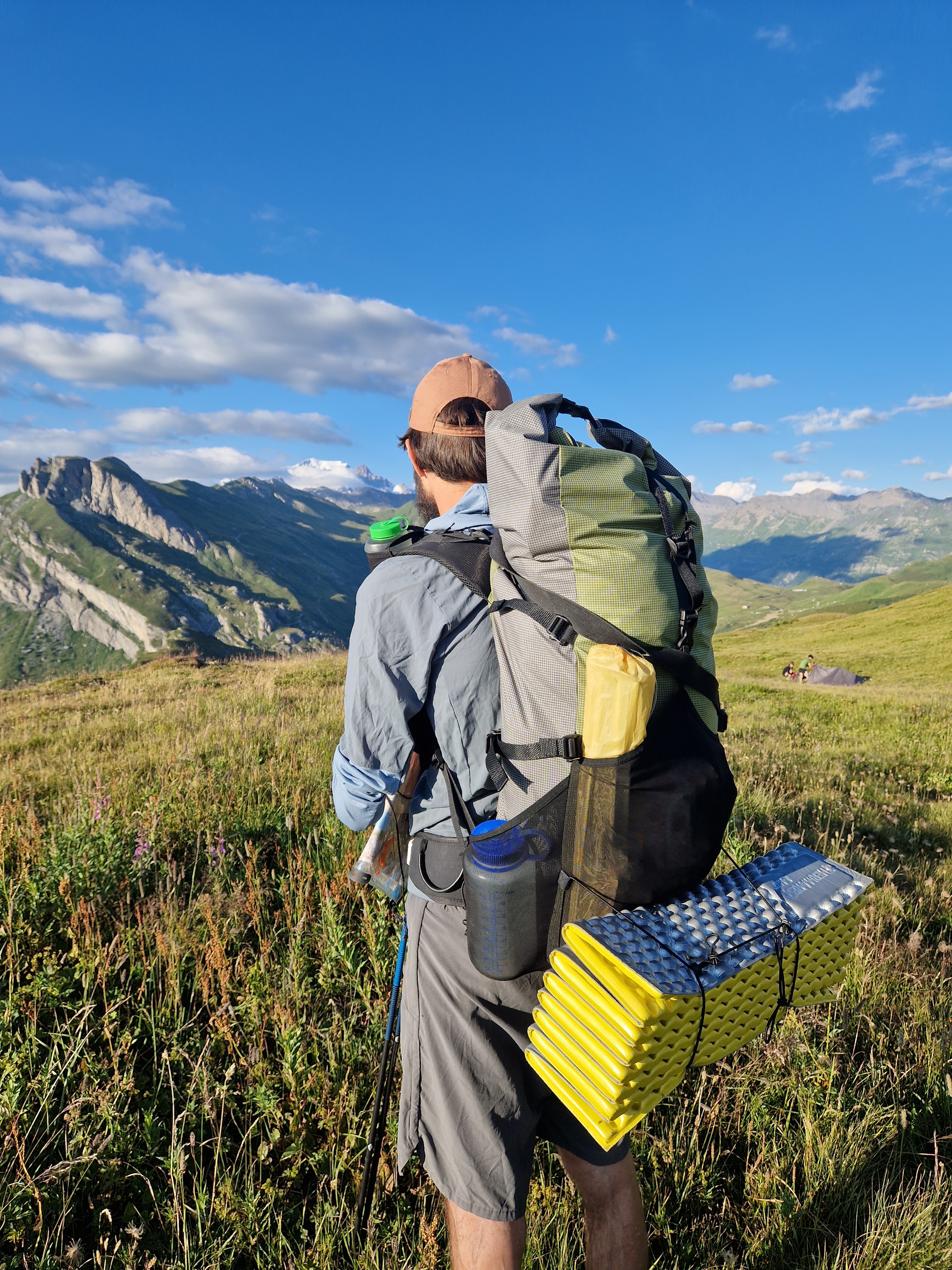
Clem: I designed and sewed our main piece of gear.
Made from gridstop fabric, there are super resistant. Weighting 650g empty, it's almost 1kg saved!
But this backpack deserves a future article to show and explain the full process.
The cooking setup
Coming soon
The sleeping setup
Coming soon
Orienteering
Coming soon
Electronics
Coming soon
The complete "lightpacker" list
Scroll down to see it all